Johari Window
The Johari Window is a psychological tool that helps individuals understand their self-awareness and improve communication within groups.
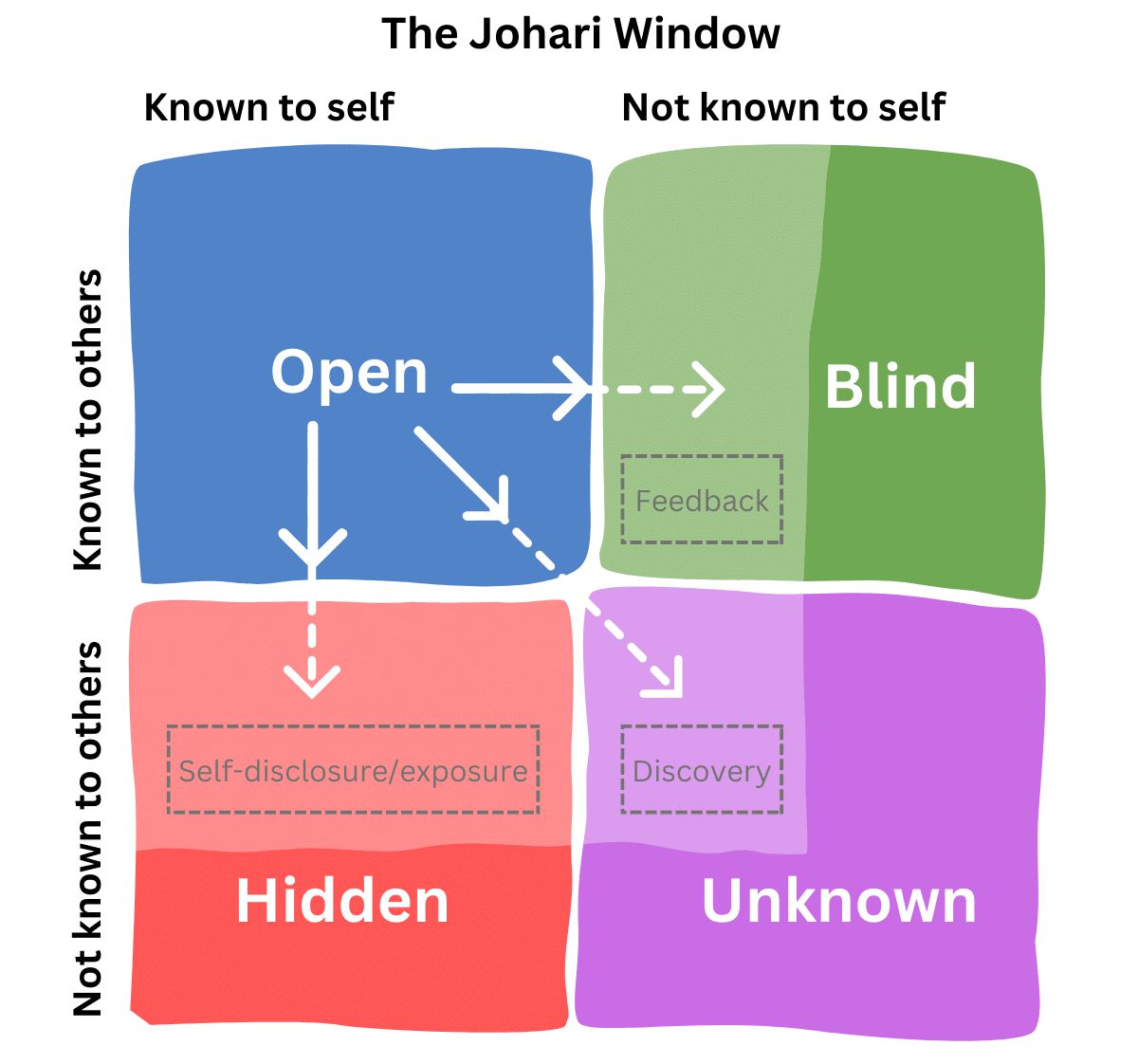
Developed by Joseph Luft and Harry Ingham in 1955, it consists of a grid divided into four quadrants. Each quadrant represents different aspects of self-awareness and how we relate to others.
The Four Quadrants of the Johari Window
1. Open Area (Arena)
This part includes information about yourself that both you and others know. It includes your skills, behaviours, and experiences that are openly shared.
Example:
Your name, job title, and skills you openly discuss with colleagues.
2. Blind Area
This area contains information that others know about you, but you are unaware of. It represents feedback and perceptions from others.
Example:
A habit that annoys others, but you don’t realise it.
3. Hidden Area (Façade)
This section includes information that you know about yourself but keep hidden from others, such as personal feelings or secrets.
Example:
Your fears or concerns that you choose not to share with colleagues.
4. Unknown Area
This quadrant contains information that neither you nor others are aware of. It can include untapped potential or subconscious feelings.
Example:
Skills or talents you haven’t discovered yet.