Theory of Motivation
Maslow’s Hierarchy of Needs
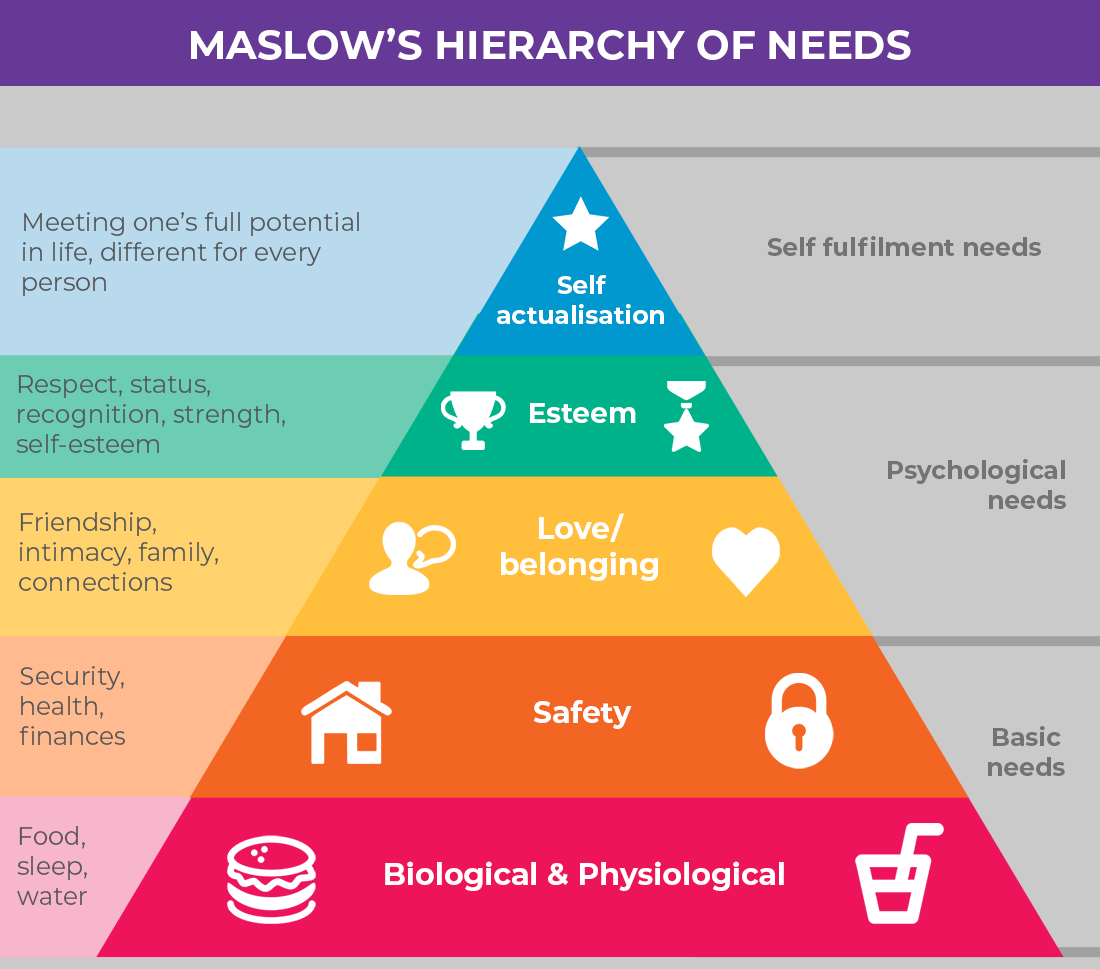
Maslow’s Hierarchy of Needs explains that people are motivated by different levels of needs.
First, individuals need basic necessities like food and safety. Once these needs are satisfied, they seek social connections, self-esteem, and finally personal growth.
Organisations should ensure that employees’ basic needs are fulfilled first before expecting higher-level motivation.
Maslow’s Hierarchy of Needs is a theory that explains how people’s motivations are based on different levels of needs. It is often represented as a pyramid with five levels:
1. Physiological Needs
These are basic needs for survival, like food, water, and shelter. People need these first before they can focus on anything else.
2. Safety Needs
Once basic needs are met, people seek safety and security, such as a stable job, health insurance, and a safe environment.
3. Social Needs
After feeling safe, individuals want to connect with others. This includes friendships, love, and belonging to a group or community.
4. Esteem Needs
People then look for self-esteem and respect from others. This includes feeling valued, achieving goals, and receiving recognition.
5. Self-Actualization
This is the highest level, where individuals strive to reach their full potential and pursue personal growth and fulfilment, such as pursuing hobbies or realising dreams.